Cartoon 3D Font Review: Playful Type for Branding
There is a specific moment in every boutique branding project where the mood board feels too serious. I was recently working on a visual refresh for a local artisanal bakery that wanted to pivot away from minimalist beige aesthetics toward something warmer and more nostalgic. The brief called for "approachable joy," but my initial typeface selections felt stiff. That is when I pulled Cartoon 3D into the design file to test it as a wildcard option. As a display font, it immediately shifted the energy of the brand board, transforming a generic layout into something with tangible personality.
Testing this typeface wasn't just about looking at glyphs in isolation; it was about seeing how those inflated, bubbly forms held up against real-world constraints like packaging die-lines and social media thumbnails. After running it through logo concepts, menu headers, and sticker mockups, here are my honest observations on using Cartoon 3D in professional creative work.
Visual Character and First Impressions
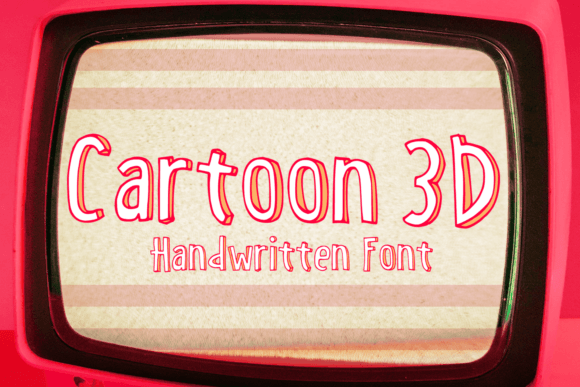
Cartoon 3D does exactly what its name suggests, but with enough refinement to avoid looking like cheap clip art. The letterforms possess a distinct volumetric quality, mimicking the look of balloon letters or soft clay. In my testing, the depth rendered cleanly without pixelation at large sizes, which is crucial for print production. The weight distribution is surprisingly balanced; despite the decorative nature of the 3D effect, the counters remain open enough to maintain legibility at headline scales.
What stood out during the brand identity phase was the font’s inherent friendliness. It lacks sharp terminals, relying instead on rounded corners and smooth curves that subconsciously signal safety and playfulness. This makes it an exceptional choice for brands targeting families, children, or anyone seeking a break from corporate rigidity. However, because the visual texture is so rich, it demands negative space. When I tried tightening the tracking for a compact logo lockup, the 3D shadows began to collide, creating visual mud. Giving each letter room to breathe is non-negotiable with this typeface.
Performance Across Brand Touchpoints
A pretty font on screen means nothing if it fails in production. I tested Cartoon 3D across five key deliverables to gauge its versatility:
- Logo Design: It works beautifully as a primary logotype for casual brands but requires careful kerning. I found it best suited for wordmarks rather than monograms, as the intricate 3D details get lost when scaled down to favicon size.
- Packaging Mockups: This is where the font truly shines. On a kraft paper bag mockup and a glossy product label, the dimensional effect created a tactile illusion that elevated the perceived value of the product. It turned simple text into a graphic element.
- Social Media Graphics: For Instagram stories and TikTok covers, Cartoon 3D stops the scroll. The high contrast and bold silhouette read instantly on mobile screens, even when overlaid on busy photography.
- Website Headers: Use sparingly. While effective for H1 tags on landing pages, I would avoid using it for navigation menus or subheads. The decorative weight can slow down cognitive processing if overused in UI contexts.
- Merchandise: T-shirt and sticker designs benefit immensely from this style. The font has a built-in illustrative quality that reduces the need for additional artwork, making it cost-effective for print-on-demand projects.
Strategic Font Pairing and Hierarchy
Because Cartoon 3D is such a dominant display font, it cannot carry a layout alone. It needs a supporting actor that provides stability without competing for attention. During the bakery project, I paired it with a clean, geometric sans serif for body copy and pricing information. The contrast between the whimsical header and the utilitarian subtext created a professional hierarchy that kept the brand from feeling juvenile.
If you are aiming for a more retro or editorial vibe, consider pairing it with a high-contrast serif font. The sharp serifs can ground the floaty nature of the 3D letters, adding a touch of sophistication. Avoid pairing Cartoon 3D with other decorative fonts, scripts, or handwritten typefaces. The visual noise becomes overwhelming, and readability plummets. Let this font be the singular focal point of your typographic system.
Limitations and Practical Considerations
No font is universal, and Cartoon 3D has clear boundaries. It is strictly a display typeface. Do not attempt to use it for paragraphs, captions, or any text smaller than 24pt. The internal shading and dimensional effects will blur at small sizes, rendering the text illegible. Furthermore, it is unsuitable for formal industries. If you are designing for finance, legal, medical, or luxury sectors, this font will likely undermine the necessary tone of authority and precision.
From a technical standpoint, always check the OpenType features before finalizing your design. Some versions of novelty fonts include alternates or ligatures that can solve awkward spacing issues unique to 3D geometry. Also, verify the multilingual support if your client operates in multiple regions; stylized fonts sometimes lack extended character sets. Finally, and most importantly, review the commercial licensing terms. Using a font for a personal greeting card is different from using it on product packaging sold nationally. Ensure your license covers the intended end-use, including digital embedding and merchandise, to protect both yourself and your client.
When to Choose Cartoon 3D
After integrating this typeface into a live project, my verdict is that Cartoon 3D is a specialized tool for specific emotional outcomes. It excels when the goal is to evoke nostalgia, fun, warmth, or approachability. It is a fantastic asset for kids’ book covers, seasonal fall promotions, candy shop branding, and creative studio identities that want to signal they don't take themselves too seriously.
For designers, the key to success with this font is restraint. Treat it like a spice rather than a main ingredient. When used intentionally within a structured modern typography system, Cartoon 3D transforms from a novelty into a powerful branding device that connects with audiences on an emotional level. Just remember to let it have its space, pair it wisely, and always test it in context before sending files to print.